
- No products in the cart.

There is a particular kind of corporate gift that gets opened at a year-end function, photographed once, and left on the table. Everyone has received one. Nobody sets out to send one.
The difference between a gift that gets kept and one that gets abandoned is rarely budget. Corporate gifting goes wrong because of a handful of decisions made in a hurry in the third week of November, when the only remaining question is what can still arrive in time.
This is a guide to making those decisions earlier and better.
What’s in this guide
- Start with who, not what
- The test a good gift passes
- 12 ideas that get kept
- The 20% branding rule
- Staff gifts are different
- Personalising at volume
- The timeline that works
- Tax and compliance
- Mistakes that waste the budget
- Gifting outside December
- Is it actually working?
- If you are a small business
- Corporate gifting FAQ
The deadline nobody plans for
Most South African businesses close between the 15th and 20th of December. Working backwards from a handover before then, with production and courier time on top, artwork and name lists need to be finalised in early November.
Start with who, not what
The most common mistake in corporate gifting is choosing one item and sending it to everybody. A key client billing seven figures and a supplier you email twice a year should not receive the same thing, not because one matters more as a person, but because an identical gift signals that no thought was applied to either.
Split the list into tiers before you look at a single product.
| Tier | Typical budget | What works |
|---|---|---|
| Key clients and partners | R400–R900 | A considered set, or one genuinely good item, personalised |
| Wider client base | R150–R350 | A quality single item — drinkware, leather, accessories |
| Staff | R200–R500 | Something for them, not for the company |
| Suppliers and wider network | R80–R150 | Small, useful, well made |
Setting tiers first means you buy to a plan rather than negotiating with yourself item by item, which is how corporate gifting budgets quietly overrun.
The test a good gift passes
One question sorts most options in seconds: would they have bought this for themselves?
If yes, it gets used. If no, you are relying on politeness, and politeness has a shelf life of roughly one week.
12 ideas that get kept
Drinkware
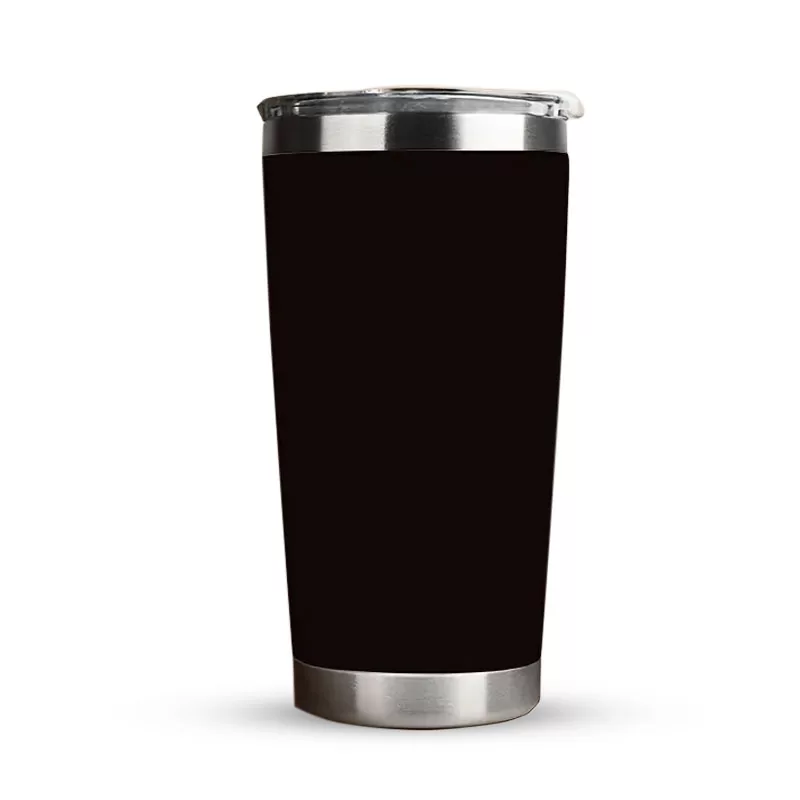
1. A personalised insulated tumbler. The workhorse of corporate gifting. A 20oz insulated travel tumbler is used daily, visible on desks, and genuinely wanted rather than tolerated.
Leather goods
2. A leather wallet. A double-fold cowhide wallet reads as considered rather than promotional, and people keep wallets until they disintegrate.
3. A phone card holder. A card holder is small, cheap and touched a dozen times a day — excellent for a wider list.
Keyrings and accessories
4. A quality leather keyring. A carbon fibre leather keychain or PU leather keyring sits at a modest price point without feeling cheap.
5. A practical multi-tool keyring. A miniature tool set keychain suits technical and trade audiences particularly well.
Desk items
6. A personalised planner. A wire-o bound A5 planner stays in front of someone for a whole year, which is more exposure than any advert.
7. A desk calendar. A personalised A5 desk calendar is the longest-running item on this list and the one colleagues ask about.
Sets and higher tiers
8. A curated set rather than one large item. Two or three coordinated pieces read as considered. Browse luxury gift sets or build your own combination.
9. Something local and specific. A well-chosen South African product carries a story that an imported generic item cannot.
Beyond objects
10. A charitable contribution in their name. Appropriate for clients who explicitly do not want gifts, provided the cause is genuine rather than a convenient dodge.
11. An experience for a team. For a key client relationship, something shared frequently beats something posted.
12. A genuinely good handwritten card, alone. Underrated. For some relationships a specific, well-written note outperforms an object entirely, and costs almost nothing.
What reliably fails the test: branded stress balls, thin plastic pens, desk toys, and anything where the logo is larger than the useful part of the object.

The 20% branding rule
The instinct is to make the logo as large as possible. This is precisely backwards, and it is the most consistent error in corporate gifting.
The more a gift looks like advertising, the less likely it is to be used, and an unused gift advertises nothing at all. A recipient who uses your tumbler daily for two years delivers vastly more exposure than one who was shown a large logo once before putting it in a drawer.
A workable guideline: branding occupies no more than about 20% of the visible surface, positioned somewhere secondary. The base of a tumbler, the inside of a wallet, the reverse of a planner. Present, findable, not shouting.
Match the branding to the tier
For top-tier clients, consider dropping company branding entirely and personalising with the recipient’s name instead. The gift still comes from you: it arrives with your card and your covering note, but the object itself is theirs rather than an advertisement they have been asked to carry.
Staff gifts are a different problem
Client gifts are relationship maintenance. Staff gifts are recognition, and treating them identically is why so many land badly.
Personalise with the individual’s name, not the company logo. This single change transforms staff gifting. A tumbler with someone’s own name is a gift; the same tumbler with the company logo is equipment, and people can tell instantly which one they have been handed.
Avoid anything that implies more work. Branded notebooks and desk organisers read as office supplies rather than thanks.
Be consistent across levels. Visible tiering between junior and senior staff gifts causes more damage than a smaller uniform gift ever would.
Ask about dietary and cultural fit. Hampers containing alcohol or specific foods exclude people, sometimes pointedly. A neutral useful item avoids the problem entirely.
The thing staff actually value
Worth saying honestly: in most surveys of workplace recognition, specific acknowledgement outperforms objects. A gift accompanied by a manager naming what that person actually did during the year lands considerably harder than the same gift handed over in silence.
Personalising at volume
Individually naming forty gifts is straightforward if you handle three things properly, and painful if you do not.
- Send a clean spreadsheet. One column of names, spelled and capitalised exactly as they should print. Whatever you send is what gets made: nobody proofreads your staff list for you.
- Decide about surnames early. Two people called Thabo makes first-name-only a problem you want to catch before production, not after.
- Approve a physical sample. One unit before the run. Every professional supplier expects this and it is the cheapest insurance available in bulk corporate gifting.
Order a few spares
Always. New starters appear, names get missed off lists, and one item always arrives damaged. Five percent extra costs very little and prevents the specific misery of one person watching everyone else receive something.
Check the list against reality
Staff lists are frequently out of date. Someone has left, someone is on leave, someone changed their surname. Verify the list the week before you submit it rather than using the version from March.
The timeline that works
Backwards from when gifts need to be in hand:
| When | What happens |
|---|---|
| 8 weeks out (early October) | Agree budget and tiers. Confirm headcount and client list. |
| 6 weeks out | Choose items, request quotes, confirm stock availability. |
| 5 weeks out | Submit artwork and name lists. Request a sample. |
| 4 weeks out (early November) | Approve the sample. Production begins. |
| 2 weeks out | Delivery to you. Check quantities against the list. |
| 1 week out | Distribute or courier, before offices start closing. |
The bottleneck is almost never production capacity. It is waiting for someone internally to approve artwork, which is why the sample stage should have a named owner and a deadline.
Courier realities
South African courier networks slow noticeably from the second week of December, and deliveries to smaller towns take longest exactly when everyone has travelled there. If clients will be away, ship to where they actually are or hold until January.
Tax and compliance
Two checks worth doing before you order, both quick.
Tax treatment. Business gifts have implications that vary by circumstance. Broadly, gifts to clients may be deductible as a business expense, while gifts to employees can be treated as a taxable fringe benefit depending on value and form. The rules and thresholds are genuinely fiddly and they change: the current position is published by SARS, and this is a five-minute conversation with your accountant rather than something to guess at.
Recipient gift policies. If you deal with public-sector clients, listed companies or regulated industries, check their policy before sending anything. Many require declaration above a set value, and some prohibit gifts entirely. A gift that creates an awkward compliance obligation for the recipient is worse than no gift, and it is a genuinely bad look.
When in doubt, ask the relationship owner rather than the recipient. “Is there a gift policy we should know about?” is a normal question and much less awkward than the alternative.
Mistakes that waste the budget
- One gift for everybody. Signals no thought was applied to any of them.
- Logo too large. The gift becomes an advert and stops being used.
- Ordering in late November. You end up choosing from what can still arrive.
- Company branding on staff gifts. Turns a gift into equipment.
- Skipping the sample. One approved unit prevents an entire run being wrong.
- Hampers with alcohol by default. Excludes people, sometimes pointedly.
- Cheap novelty items. Disposable, and they say what you think the relationship is worth.
- No covering note. The card is what makes it from a person rather than an account.
Corporate gifting outside December
The obvious point that most companies miss: a gift arriving in December competes with every other gift that client received that fortnight. The same gift in March arrives alone.
Moments worth using instead: the anniversary of a client relationship, the completion of a project, a client’s own milestone, or onboarding a new staff member. Each is more specific than “it is December”, and specificity is the whole mechanism.
Onboarding gifts in particular are underused. A new employee receiving something personalised in their first week starts differently to one who receives a laptop and a parking card.
The short version
Corporate gifting is mostly solved by four decisions, made early.
Tier the list before choosing anything. One gift for everybody is the error that produces all the others.
Keep the logo small. A gift that looks like advertising stops being used, and an unused gift advertises nothing.
Personalise staff gifts with their name, not yours. It is the difference between a gift and equipment.
Start in October. Everything difficult about December gifting is caused by beginning in December.
Get those right and the choice of object matters far less than people assume. Get them wrong and no amount of budget rescues it.
Corporate gifting FAQ
How much should a company spend per corporate gift?
It depends on the tier. Roughly R80 to R150 for a wider network, R150 to R350 for the general client base, R200 to R500 for staff, and R400 to R900 for key clients. Setting tiers first prevents the budget drifting item by item.
Should corporate gifts have our logo on them?
Yes, but small. Keep branding to around 20% of the visible surface and position it somewhere secondary. A gift that looks like an advert gets used less, and an unused gift delivers no exposure at all.
What are the best corporate gifts for staff?
Items personalised with the employee’s own name rather than the company logo. Drinkware, quality leather accessories and desk items all work. Pair the gift with specific verbal recognition, which consistently matters more than the object.
When should we order year-end corporate gifts?
Artwork and name lists finalised in early November, with the process starting in early October. Most South African offices close by around 20 December, and couriers slow considerably from the second week of that month.
Are corporate gifts tax deductible in South Africa?
Client gifts may be deductible as a business expense, while staff gifts can be treated as a taxable fringe benefit depending on value and form. Thresholds change, so check the current SARS position with your accountant before committing.
What should we avoid sending as a corporate gift?
Cheap branded novelties, anything with an oversized logo, hampers containing alcohol by default, and identical gifts across every tier. Also check whether the recipient organisation has a gift policy, particularly in the public sector.
Is a gift still worth sending if we have left it late?
Yes, but change the approach. Choose in-stock items needing no personalisation, put real effort into the covering note, or hold the gift until January when it arrives alone rather than competing with everything else.
Is corporate gifting actually working?
Most companies spend the budget every year without ever asking whether it achieved anything, which is unusual for a line item of that size.
You cannot measure it precisely, but two signals are available and neither costs anything to collect.
Do people mention it? A gift that gets acknowledged in the next call, or turns up in the background of a video meeting six months later, is working. Silence across an entire client list is information.
Ask the relationship owners. The account managers who deal with those clients daily know which gifts landed and which were politely ignored. A five-minute conversation in January is more useful than any survey.
The honest case for corporate gifting
It is not a sales tactic and it performs badly if treated as one. Nobody awards a contract because of a tumbler. What a good gift does is keep a relationship warm and signal that a person, not an invoicing system, is on the other end.
That is a modest claim, and it is the right one. Companies that expect measurable revenue from gifting are usually the ones that end up sending cheap branded novelties, because the logic of maximising reach per rand leads directly there.
If you are a small business, not a corporate
Everything above scales down, and small businesses have a genuine advantage: you actually know your clients.
Twenty clients you can name individually is a far better position than two thousand you cannot. Skip the tiering and the bulk personalisation, and choose something specific per person. A handwritten note referencing a real conversation, attached to a modestly-priced useful object, comfortably outperforms anything a large company sends at scale.
The budget also matters less than small businesses fear. Corporate gifting done personally at R150 a head beats generic gifting at R500.
Where to go next
Browse the corporate gifts range for options by budget, or the luxury gift sets for top-tier relationships. For bulk personalised orders, get in touch early — quantity work carries the longest lead time of anything discussed here.
Our wider guide to personalised gifts for every occasion covers the same principles at individual scale.
Make it personal
Every item in our range can be customised with your own photo, name or message, printed and finished in-house and delivered anywhere in South Africa.