
- No products in the cart.
The DTF vs sublimation question gets asked as though one method is better. It is the wrong framing. They are different processes that solve different problems, and most working print businesses eventually run both.
What actually matters is knowing which one a given job needs before you quote it. Quoting a sublimation price and then discovering the customer wants black cotton is an awkward conversation, and an avoidable one.
Seven differences below, in the order that decides jobs.
What’s in this guide
- How each process actually works
- 1. What fabrics each will bond to
- 2. Dark garments and white ink
- 3. How the print feels
- 4. Durability and washing
- 5. Hard goods and non-fabric items
- 6. Equipment and running costs
- 7. Workflow and speed
- Choosing per job
- Explaining it to customers
- Using both on one order
- The decision, summarised
- DTF vs sublimation FAQ
How each process actually works
The mechanics explain every difference that follows, so they are worth understanding rather than memorising.
Sublimation
Solid dye converts directly to gas under heat and pressure. At the same moment the polymer in the substrate opens microscopically, the gas moves in, and as everything cools the polymer closes around the dye.
The image ends up inside the material. Nothing sits on the surface, which is why a sublimated print has no texture and cannot crack or peel.
DTF
Direct to film prints your design onto a PET film, including a white ink layer, then dusts it with adhesive powder and cures it. The film is pressed onto the garment and the design transfers as a thin flexible layer bonded to the surface.
The image sits on the material. That single distinction drives most of the trade-offs.
The one-sentence version
Sublimation dyes the material and needs polyester or a polymer coating. DTF glues a printed layer on top and works on almost anything, including dark cotton.
1. What fabrics each will bond to
The most consequential difference, and the one that eliminates most jobs immediately.
Sublimation bonds only to polyester and polymer coatings. On 100% polyester the result is brilliant. On a 65/35 blend it comes out softer and faded, which can be a deliberate vintage look but only if you chose it. Below roughly 60% polyester the result is generally disappointing, and on pure cotton it washes out within a couple of cycles.
DTF bonds to cotton, polyester, blends, canvas, denim and most textiles. The adhesive does not care what the fibre is made of, which is precisely why it has become so widely used.
This alone settles a large share of enquiries. A customer who wants their logo on the cotton t-shirts they already own has one option, and it is not sublimation.
2. Dark garments and white ink
The second job-deciding difference.
Sublimation has no white ink. The dye is translucent, so the colour you see is dye mixed with whatever is underneath. On white it looks correct, on grey everything shifts, and on black nothing shows at all. White areas of a design are simply unprinted substrate.
DTF prints a white underbase beneath the colours. That layer is what makes a design readable on navy, black or red, and it is why DTF took over the dark-garment market so quickly.
If the garment is not white or very light, the DTF vs sublimation question is already answered.
3. How the print feels
Run a hand over each and the difference is obvious.
A sublimated print has no hand feel whatsoever. There is nothing on the surface to feel, because the dye is in the fibre. For all-over prints, sportswear and anything where breathability matters, this is a genuine advantage.
A DTF print has a slight film to it. Modern DTF is considerably softer than older transfer methods, and a small design is barely noticeable. Large solid blocks of colour are another matter: a full-front print covering most of a shirt can feel stiff and sits less comfortably.
Designing around it
If you are working in DTF, break up large solid areas. Line work, distressed textures and designs with gaps in them feel dramatically better than a filled rectangle, and they use less ink.
4. Durability and washing
Both last well when done properly, and they fail differently.
Sublimation cannot crack, peel or fade in the way a surface print can, because there is no surface layer. Its failure mode is the garment wearing out around a print that still looks new.
DTF is durable but is a layer, and layers can eventually lift or crack, usually at edges and usually because of heat. Tumble drying on high and ironing directly onto the design are the two things that shorten its life most.
In practice both survive years of normal washing. The realistic difference is what happens under abuse, and there sublimation wins comfortably.
5. Hard goods and non-fabric items
This is where sublimation wins outright and where a lot of the margin in a small print business actually sits.
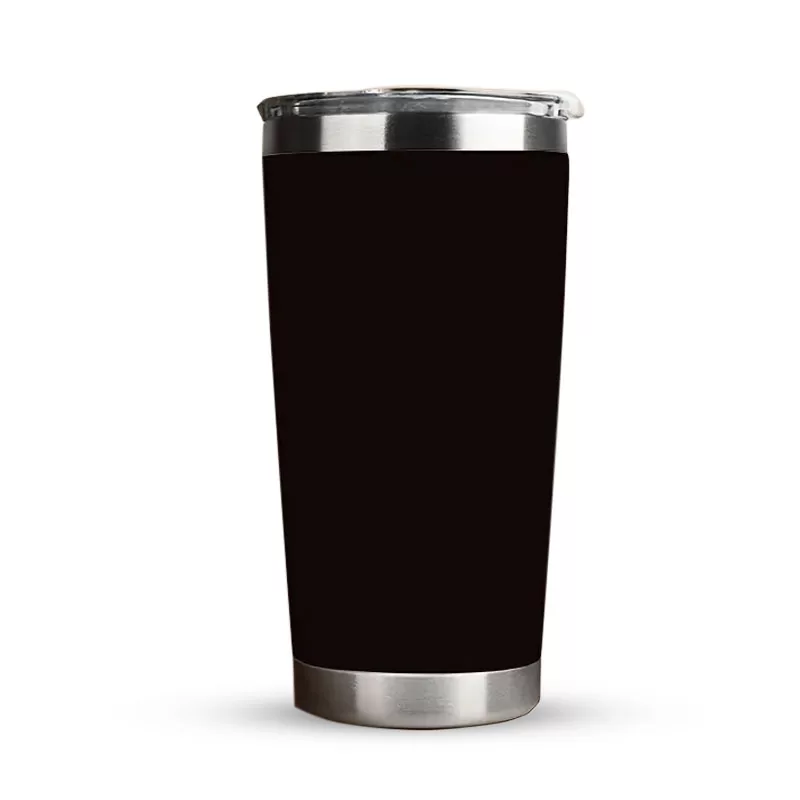
Coated tumblers, mugs, keyrings, coasters, phone accessories, aluminium panels and slate all sublimate beautifully. The dye goes into the coating, survives the dishwasher, and produces the saturated colour these products are known for.
DTF onto hard goods is possible in limited cases but is not what the process is designed for, and adhesion on curved or rigid surfaces is unreliable.
For a business selling personalised gifts rather than apparel, this single difference usually decides which machine to buy first. Most of our own customisable items are sublimated onto coated blanks for exactly this reason.
6. Equipment and running costs
| Sublimation | DTF | |
|---|---|---|
| Printer | Converted EcoTank or dedicated unit | Dedicated DTF printer, or buy transfers in |
| Consumables | Ink and sublimation paper | Ink including white, film, adhesive powder |
| Extra equipment | Heat press | Heat press plus a curing oven or shaker |
| Entry cost | Lower | Higher |
| Cost per print | Very low | Higher, white ink is the expensive part |
| Maintenance | Light | White ink must be circulated or it settles |
Two points worth emphasising. Sublimation is genuinely cheap to run once the equipment is bought: the consumables are a small fraction of most jobs. DTF costs more per print, and white ink in particular needs the printer used regularly or it clogs, which makes it a poor fit for someone printing occasionally.
You do not have to own a DTF printer
A great many small businesses buy DTF transfers ready-made from a supplier and press them with the heat press they already own. That removes the printer cost, the maintenance and the white ink problem entirely, and is usually the right answer until DTF volume is substantial.
7. Workflow and speed
Sublimation is the simpler process: print, press, peel. Three steps, no curing, minimal handling.
DTF has more stages: print, apply powder, cure the powder, then press and peel. Each stage is straightforward, but there are more places for something to go wrong and the setup is messier.
Against that, DTF transfers can be printed in batches and stored, then pressed on demand. That is genuinely useful for a business holding stock of a popular design, because the slow part is done in advance.
Choosing per job
In practice the DTF vs sublimation decision takes about five seconds once you know the questions: what is the item made of, and what colour is it.
| The job | Use | Why |
|---|---|---|
| Photo on a white polyester shirt | Sublimation | Full colour, permanent, no hand feel |
| Logo on a black cotton hoodie | DTF | White underbase, works on cotton |
| Personalised tumbler or mug | Sublimation | Nothing else survives a dishwasher as well |
| Coated keyrings and coasters | Sublimation | Vivid colour, no minimum order |
| Mixed-fabric team kit | DTF | One method covers every garment |
| All-over sportswear print | Sublimation | Breathable, no film, edge to edge |
| Small run on customer-supplied cotton | DTF | Sublimation will not bond at all |
| 200 shirts, two flat colours | Neither — screen print | Cost per unit drops sharply at volume |
Which to start with
If you are selling personalised gifts, tumblers, keyrings and photo items, start with sublimation. Lower entry cost, simpler workflow, better margins on hard goods, and it covers the bulk of that market.
If you are selling apparel, particularly to customers who bring their own garments or want dark cotton, you need DTF. Begin by buying transfers in rather than buying a printer, and only bring it in-house once the volume clearly justifies it.
Most established businesses end up running both, because between them they cover almost everything except high-volume flat-colour runs.
Mistakes people make with both
- Promising sublimation on cotton. The most common and least recoverable error. It will wash out.
- Quoting before asking about the garment. Fabric and colour decide the method, and the method decides the price.
- Buying a DTF printer too early. White ink needs regular use. An occasionally-used DTF printer is a clogged DTF printer.
- Designing large solid blocks for DTF. Stiff, heavy, and expensive in white ink.
- Assuming one machine does everything. A flat press does not press mugs, and neither method replaces screen printing at volume.
- Skipping care instructions. Most durability complaints are tumble drying, not the print.
Judging quality on both
Whichever method a job uses, the same handful of faults account for most complaints.
What a good sublimation print looks like
Even colour across the whole design with no lighter patches, no ghosting at the edges, no yellow tinge on the surrounding fabric, and nothing you can feel with a fingertip. Patchiness usually means moisture or uneven heat; a faint outline around the design is a normal press mark on polyester.
What a good DTF print looks like
Clean sharp edges with no adhesive residue outside the design, colours that sit opaque rather than showing garment colour through them, and a layer that flexes with the fabric rather than resisting it. Residue around the edges means too much powder or an uneven cure.
The test worth doing
Wash a sample. Cold, inside out, then a normal dry. Most faults that matter to a customer only appear after the first wash, and finding them on your own sample is considerably cheaper than finding them through a complaint.
Where to check settings
Both processes are sensitive to temperature, time and pressure, and both are worth starting from a manufacturer reference rather than a number from a video. Ink manufacturers such as Sawgrass and printer makers such as Epson publish substrate settings and profiles, and those are the correct starting point before you begin adjusting for your own press.
DTF vs sublimation FAQ
Can sublimation print on cotton?
Not reliably. Sublimation dye bonds to polymers and cotton has none, so the image fades badly within a wash or two. Coating sprays exist as a workaround but DTF is the correct answer for cotton.
Which is better for dark shirts?
DTF, without qualification. Sublimation has no white ink, so a design on a dark garment is effectively invisible. The white underbase in DTF is exactly what makes dark garments possible.
Which lasts longer?
Sublimation, because the dye is inside the material and cannot crack or peel. DTF is durable in normal use but is a surface layer, and heat from tumble drying or ironing shortens its life.
Which is cheaper to run?
Sublimation. Equipment costs less to enter and consumables are cheap. DTF costs more per print, largely because of white ink, and needs regular use to avoid clogging.
Can I use one heat press for both?
Yes. A flat heat press handles both methods, though each needs its own temperature, time and pressure settings. DTF additionally needs curing equipment unless you buy transfers ready-made.
Do I need both for a small business?
Not to start. Sublimation alone covers personalised gifts and hard goods well. Add DTF, initially by buying transfers rather than a printer, once cotton and dark garments become a real part of your orders.
Explaining DTF vs sublimation to customers
Customers rarely arrive knowing the difference, and how you explain it shapes whether they trust your recommendation or think you are upselling.
The explanation that works is short and physical: sublimation dyes the fabric so there is nothing to feel, but it only works on white or light polyester. DTF prints a layer on top, so it works on cotton and dark colours but you can feel it slightly.
Then ask the two questions that decide it: what is the garment made of, and what colour is it. Framing DTF vs sublimation as a diagnosis rather than a sales choice makes the conversation easier for both sides.
When the customer wants the wrong one
Occasionally someone insists on sublimation for a cotton shirt because they read that it lasts longer. Explain once, clearly, that the dye has nothing to bond to and the print will wash out. If they still want it, decline the job rather than take money for something you know will fail: the refund and the review cost more than the order was worth.
Using both on the same order
Larger jobs sometimes need both methods, and there is nothing wrong with that.
A club ordering white polyester shirts and black cotton hoodies needs sublimation for one and DTF for the other. A corporate order of branded tumblers and staff t-shirts is the same situation. Quote them as separate line items rather than averaging, because the underlying costs genuinely differ.
The thing to watch is colour matching. The same logo run through DTF vs sublimation will not land on exactly the same shade, because one is dye in polyester and the other is pigment on film. If both items will be seen side by side, press a sample of each and check them together before committing to the run.
Keep separate settings logs
Temperature, time and pressure differ between the two methods and between substrates within each. A notebook with a page for each is worth more after a month than any chart you will find online, because it is calibrated to your press and your materials.
The DTF vs sublimation decision, summarised
If you take one thing from this guide, make it the two-question test.
What is it made of? Polyester or a coated hard good means sublimation is available. Cotton, canvas or denim means it is not.
What colour is it? White or very light keeps sublimation on the table. Anything darker needs the white underbase that only DTF provides.
Answer both and the DTF vs sublimation question is settled before you have thought about price, feel or durability. Those factors matter for designing the job well; they almost never override the two questions above.
Where each earns its money
Sublimation earns most on hard goods. A coated tumbler or keyring costs little to produce, sells at a healthy margin, and has no sizing to guess at. That is why personalised gift businesses tend to be sublimation-first.
DTF earns most on apparel, particularly work where customers supply garments or want dark colours. It has no minimum order and no setup screens, which makes single custom pieces genuinely viable.
Neither replaces screen printing at real volume, and a business that understands where all three sit will quote better than one committed to a single method.
Where to go next
Our sublimation printing guide covers that process in depth, the heat press buying guide covers the machine both methods depend on, and custom t-shirt printing puts both in the context of an apparel run.
If you would rather buy finished personalised items than produce them, the customisable items range is made with the processes described here.
Make it personal
Every item in our range can be customised with your own photo, name or message, printed and finished in-house and delivered anywhere in South Africa.