
- No products in the cart.

Most people go about starting a craft business in exactly the wrong order. They buy equipment, then work out what to make, then discover whether anyone wants it. By the time the third question gets answered the money is spent.
The order that works is the reverse: find out whether people will pay, then work out how to make it efficiently, then buy the machine that removes the bottleneck.
Nine steps below, in the order that keeps your money where it belongs until you know something.
What’s in this guide
- 1. Validate before you spend
- 2. Narrow to one thing
- 3. Outsource before you buy equipment
- 4. Price properly from day one
- 5. The admin that actually matters
- 6. Separate the money
- 7. Choose where to sell
- 8. Build systems before volume
- 9. Know what going full-time requires
- Mistakes that cost the most
- A realistic first 90 days
- The part nobody warns you about
- What growth actually looks like
- FAQ
1. Validate before you spend
The single most expensive mistake in starting a craft business is buying equipment for a product nobody has agreed to buy.
Validation does not require a business plan. It requires strangers paying money. Friends and family saying “you should sell those” is not evidence, because they are being kind and they know you.
Cheap ways to test
- Take pre-orders. Post what you intend to make and ask people to commit. Ten strangers paying upfront tells you more than a hundred likes.
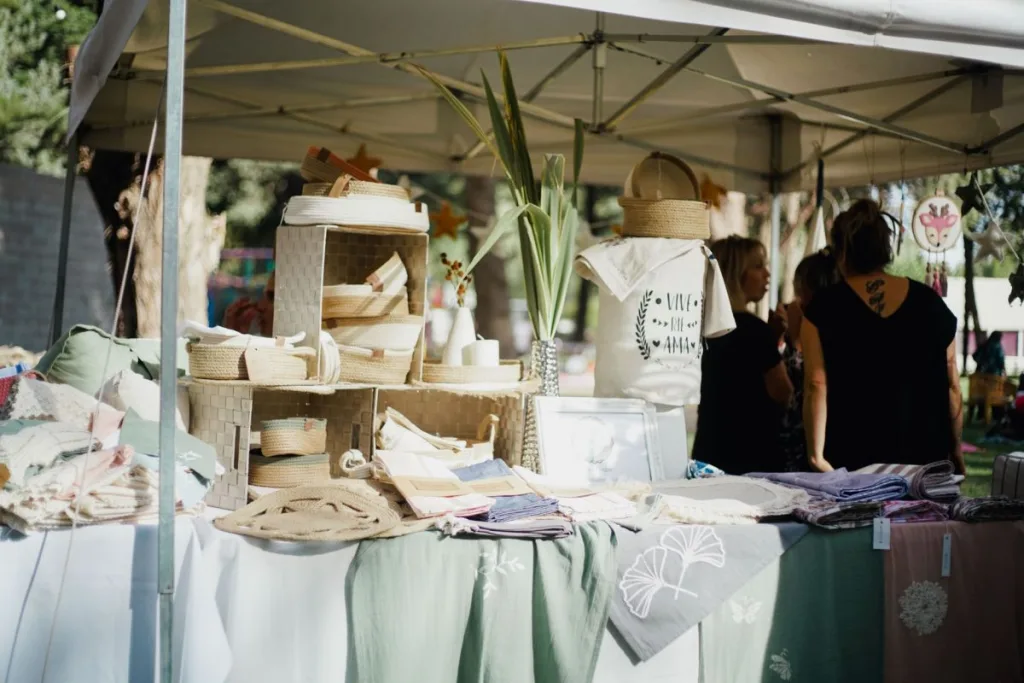
- Do one market. A single stall day costs a table fee and produces hours of unfiltered reaction from real buyers. Our guide to craft markets covers doing it well.
- Outsource a small batch. Have twenty units made by someone else and try to sell them. If they move, you have proof. If they do not, you have saved the cost of a machine.
The rule
Do not buy equipment until you have sold the thing it makes. Sell it outsourced, sell it handmade, sell it slowly, but sell it to strangers first.

2. Narrow to one thing
New craft businesses almost always offer too much. Twenty products in five categories looks like ambition and reads to customers as a jumble sale.
Narrow deliberately. One product family, made well, in a few variations. It is easier to photograph, easier to price, easier to explain in a sentence, and dramatically easier to become known for.
Choosing the narrow thing
Three filters, applied together:
- Can you make it consistently? Something that comes out right nine times in ten, not something that occasionally comes out beautifully.
- Does it carry a margin? Time-heavy items with cheap materials frequently cannot be priced sensibly.
- Is there repeat demand? Products people buy once are a harder business than products people reorder or gift repeatedly.
Personalised items score well on the third filter, because the same customer returns for a different name, a different occasion or a different recipient.
3. Outsource before you buy equipment
Equipment feels like the beginning of a craft business. It is usually the middle.
Buying transfers, blanks or finished printing from a supplier lets you sell real products, learn what customers ask for, and build a photo library before committing capital. The margin is thinner, and that is the price of finding out cheaply.
Buy the machine when outsourcing becomes the bottleneck: when turnaround times are costing you orders, or when the outsourced cost per unit at your volume clearly exceeds what the equipment would cost to run.
When that point arrives, our heat press buying guide covers choosing well, and sublimation printing covers the process most personalised-gift businesses start with.
4. Price properly from day one
Raising prices later is considerably harder than setting them correctly at the start, because existing customers notice and you flinch.
The costs that must be in your price: materials including waste, consumables, your labour at a real hourly rate, equipment wear, the units that go wrong, overheads, payment fees, and admin time. Most new makers count materials and stop, which is how a busy year produces no money.
Our guide to pricing handmade products works through seven formulas with worked examples. The short version: if a sudden hundred orders would terrify rather than delight you, your prices are too low.
5. The admin that actually matters
Less than people fear, and it is worth knowing which parts are genuinely required.
You can start as a sole proprietor
You may trade under your own name in South Africa without registering a company. That is entirely legitimate for testing an idea, and a great many craft businesses operate this way for years.
When to register a company
Registration through the Companies and Intellectual Property Commission becomes worthwhile when you want a separate legal entity, when clients or retailers require an invoice from a registered business, or when you want the liability separation. Registering on day one, before you know the idea works, is a common way to acquire annual obligations for a business that never trades.
Tax
Income from a craft business is taxable whether or not you registered a company. VAT registration becomes compulsory above a turnover threshold published by SARS: check the current figure rather than relying on what someone told you, because it changes.
Free support exists
The Small Enterprise Development Agency provides free guidance to South African small businesses, including on registration and basic business planning. Underused by makers, and it costs nothing.
Trade marks
Worth thinking about only once you have a name worth protecting and revenue to protect it with. Not a day-one task.
6. Separate the money
The habit that most reliably separates craft businesses that survive from ones that quietly drain a household.
Open a second bank account, even a basic one, and run everything through it. Materials out, sales in, nothing personal. Within three months you can see whether the business makes money, which is a question most makers genuinely cannot answer because the numbers are tangled with groceries.
Track two figures monthly
- Gross margin. Revenue minus direct costs, as a percentage. Tells you whether the products work.
- Effective hourly rate. Profit divided by hours actually worked, including admin and packing. Tells you whether the business works.
The second figure is often sobering the first time it is calculated, and it is the most useful number in a small craft business.
7. Choose where to sell
You do not need to be everywhere. Pick one channel, learn it properly, then add another.
| Channel | Good for | The catch |
|---|---|---|
| Craft markets | Testing products, meeting customers, immediate feedback | Table fee due whether you sell or not; a full day of your time |
| Instagram or Facebook | Building an audience, showing process | You are renting the audience; reach changes without warning |
| WhatsApp Business | Repeat local customers, custom orders | Does not scale; every order is a conversation |
| Your own website | Best margin, you own the customer relationship | You must bring the traffic yourself |
| Marketplace platforms | Existing buyer traffic | Commission, and you compete on price inside their walls |
| Wholesale to shops | Volume without marketing effort | Roughly half your retail; only viable if retail was priced correctly |
A common effective sequence: start at markets to learn what sells, use social to show the making, take orders on WhatsApp, and build a website once there is repeat demand worth capturing.
Own something you control
Social platforms change what they show and to whom. An email list, or at minimum a saved list of past customers, is the only audience you genuinely own. Collect contacts from the first market day.
8. Build systems before you need them
The moment a craft business gets busy is the moment disorganisation starts costing real money: missed orders, wrong names on personalised items, promises you cannot keep.
- One place for orders. A spreadsheet is fine. Messages across three apps is not.
- A standard order form. Name, spelling, contact, item, personalisation details, payment status, deadline. Whatever the customer types is what gets made, so capture it in writing.
- A settings log. Temperature, time, pressure per substrate. Worth more after a month than any chart online.
- A photo routine. Photograph every finished piece before it ships. Personalised items are gone forever once posted.
- Batch everything. Group orders by substrate, press together, pack together. Setup is the expensive part.
None of this requires software. It requires deciding once and then doing it the same way every time.
9. Know what going full-time actually requires
The dream is quitting the job. The arithmetic is less romantic and worth doing before rather than after.
To replace a salary, your craft business must produce that salary plus what the job was quietly providing: medical aid, retirement contributions, paid leave, and the sick days you can now no longer take. Somewhere between 1.3 and 1.5 times your current take-home is a realistic target, not parity.
Then there is capacity. Work out how many units you can physically produce in a working week at a sustainable pace, multiply by your profit per unit, and see whether that number reaches the target. A great many makers discover the ceiling is lower than the goal, which is useful information: it means the answer is higher prices or a different product, not more hours.
The safer path
Most successful craft businesses in South Africa grew alongside employment for a year or more. Keeping the salary while demand proves itself removes the pressure to accept every badly-priced order simply to eat, which is the thing that most often destroys a young business.
Reasonable signals that full-time is viable: consistent demand across several months rather than one good season, a waiting list rather than idle capacity, and three to six months of expenses saved.
Mistakes that cost the most
- Buying equipment first. The most expensive error available when starting a craft business.
- Pricing to match hobbyists. They do not need to cover their time. You do.
- Offering everything. Reads as clearance rather than a brand, and multiplies your stock risk.
- Mixing business and personal money. You will not know whether it works.
- Registering a company on day one. Annual obligations for an unproven idea.
- Building only on rented audience. Reach changes without warning.
- Saying yes to every custom request. Bespoke one-offs are where margin quietly dies.
- Quitting on one good season. December is not evidence of a year.
A realistic first 90 days
If you want a concrete plan rather than principles, this sequence works for most people starting a craft business.
| Weeks | Focus | Outcome you want |
|---|---|---|
| 1–2 | Choose one product family. Cost it properly. | A price you can defend |
| 3–4 | Make a small batch, outsourced or by hand. Photograph everything. | Real stock and real images |
| 5–6 | Sell to strangers. One market, or pre-orders online. | Evidence, and a list of contacts |
| 7–8 | Review what sold and what people asked for that you did not have. | A narrower, better range |
| 9–12 | Second selling round. Separate bank account. Order system in place. | Repeat customers and clean numbers |
Notice what is absent: buying a machine. That decision belongs after this period, informed by what actually sold, not before it.
The short version
If you remember five things about starting a craft business, make them these.
Sell before you buy. Equipment is a response to demand, not a way of creating it.
Narrow rather than broaden. One product family made well beats twenty made adequately.
Price for your time, not against hobbyists. They are subsidising their work. You cannot.
Separate the money on day one. A second account is the only way to know whether this works.
Grow alongside income for as long as you can. Financial pressure is what forces underpricing, and underpricing is what kills otherwise good craft businesses.
None of this is about talent. The makers who succeed are rarely the most skilled ones in any given market: they are the ones who priced properly, stayed narrow, and kept clean numbers.
Starting a craft business FAQ
Do I need to register a business to sell handmade items in South Africa?
Not to begin. You can trade legitimately as a sole proprietor while testing the idea. Registering through the CIPC becomes worthwhile once you need a separate legal entity or clients require invoices from a registered business.
How much money do I need to start?
Less than most people assume, if you outsource production initially. The costs that matter first are materials for a small batch and a market table fee. Equipment is a later decision made against proven demand.
What sells best for a new craft business?
Items under about R150 that require no size or fit decision move fastest, particularly personalised keepsakes. Products with repeat demand beat one-off purchases, because the same customer returns for a different name or occasion.
Should I sell online or at markets first?
Markets, if you can. A single day produces more usable feedback than months of online silence, because you watch real people pick things up, hesitate at prices and ask for things you do not stock.
When should I buy my own equipment?
When outsourcing becomes the bottleneck: when turnaround is costing you orders, or your volume makes the per-unit outsourced cost clearly higher than running a machine yourself.
How long before a craft business makes real money?
Most take a year or more to produce meaningful income, and the first festive season is usually the first honest test. Growing alongside employment removes the pressure that forces underpricing.
The part nobody warns you about
Starting a craft business changes your relationship with the making, and it is worth being ready for that.
The thing you did for pleasure becomes the thing you do to a deadline, for someone else, to a standard they set. Most makers hit a point where the joy briefly disappears and conclude they have made a mistake. Usually they have simply crossed from hobby to work, which is a normal transition rather than a failure.
Two habits protect against it. Keep something unsold. One project that is purely yours, that nobody has commissioned and that you will not photograph for social media. And learn to decline work. The custom request that does not fit, the customer who wants endless revisions, the order priced below your floor: saying no to those is what keeps the business sustainable.
Isolation is real
Working alone at a kitchen table is quieter than most people expect. Craft markets, local maker groups and online communities are worth the time for reasons that have nothing to do with sales. Makers who stay connected to other makers last considerably longer.
What growth actually looks like
Growth in a craft business is rarely a smooth curve. It is a series of plateaus broken by one change.
The changes that typically break a plateau: raising prices, narrowing the range, buying the equipment that removes a bottleneck, or finding one channel that works and doubling down on it. Rarely is the answer working more hours, because hours are the constraint that cannot be expanded.
If you are stuck, the useful question is which of those four you have not tried. Most makers instinctively reach for more hours first, which is the only option that makes the underlying problem worse.
Where to go next
The three guides that pair with this one: pricing handmade products, craft markets, and product photography.
If you would rather stock ready-made personalised items than produce them, the customisable items range and crafting supplies are a starting point.
Make it personal
Every item in our range can be customised with your own photo, name or message, printed and finished in-house and delivered anywhere in South Africa.