- No products in the cart.
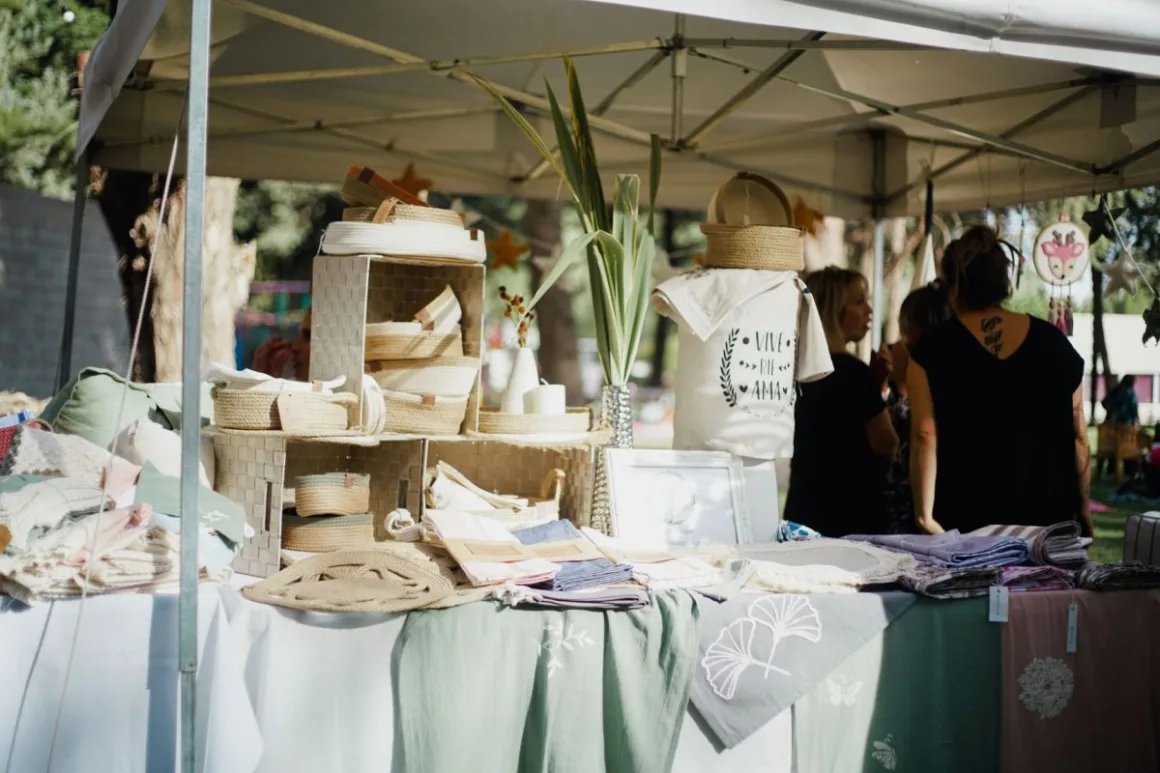
Craft markets are where most South African makers first discover whether they have a business or an expensive hobby. A day behind a table tells you more about your products, your pricing and your customers than three months of guessing online.
It also costs money before it makes any. The table fee is due whether you sell thirty items or none.
These eleven tips come from the mechanics of what actually determines a profitable stall, in roughly the order you need to think about them.
What’s in this guide
1. Choose the right market before anything else
Not all craft markets are the same event with different names. A food-led weekend market, a curated design fair and a school fundraiser attract completely different buyers with completely different budgets.
Before booking, go as a visitor. Walk the whole thing. Count how many people are carrying bags rather than coffee cups: that single observation tells you more than any organiser’s attendance figure.
What to look for
- Is anyone selling what you sell? Zero competitors can mean an untapped gap, or it can mean nobody here buys this. One or two similar stalls is usually a good sign.
- What are people actually buying? Food and coffee only, or objects too?
- What is the price ceiling? If nothing on any table is above R200, your R600 item will struggle.
- How is it run? A well-organised market with real marketing brings people. A poorly promoted one leaves you selling to other stallholders.
The rule that saves money
Never book a market you have not visited. A table fee at the wrong market is the most common avoidable loss for new makers, and no amount of good product rescues an audience that was never going to buy it.
2. Do the maths before you book
A stall is profitable or not before you arrive, and the calculation takes two minutes.
Add the table fee, transport and parking, any equipment you need to buy, and the value of your own day. Divide by your average profit per item. That number is how many units you must sell simply to break even.
| Cost | Example |
|---|---|
| Table fee | R450 |
| Transport and parking | R150 |
| Your day (8 hours at R150) | R1 200 |
| Total to recover | R1 800 |
At R80 profit per item, that is 23 units before you earn anything. If you cannot picture selling 23 units at this market, the answer is not to work harder on the day. It is a different market or a different price point.
Most first-timers leave their own time out of this calculation entirely, which is exactly how a stall that “made R1 200” turns out to have lost money.
3. Bring the right stock, in the right quantities
The instinct is to bring everything. It is the wrong instinct: a crowded table reads as a jumble sale rather than a brand.
Depth beats breadth
Six products with real depth of stock look considered. Twenty products with two of each look like clearance. Curate before you pack.
Have a range of price points
A good spread is something under R100 that people buy without thinking, a core range between R150 and R350 where most of your money is made, and two or three higher-priced pieces. Those expensive pieces often do not sell: their job is to make the middle range look reasonable.
Bring more of your bestseller than feels sensible
Selling out by midday feels like success and is actually lost revenue, because the afternoon crowd arrives to a picked-over table.
4. Lay the stall out so it sells for you
Stall layout is the highest-leverage thing you control on the day.
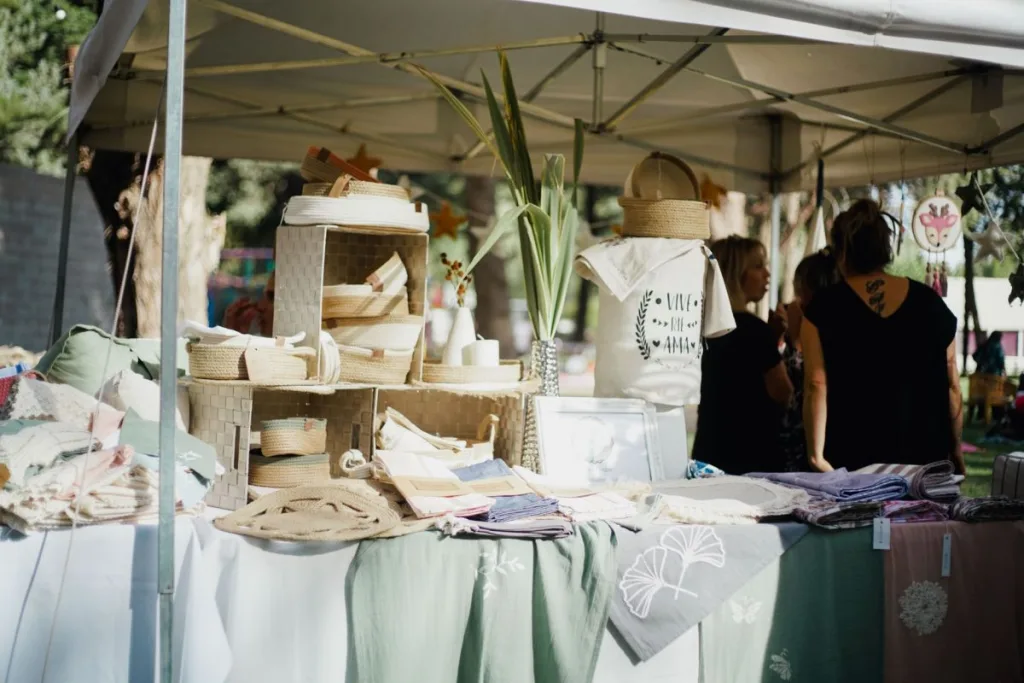
- Build height. A flat table is invisible from ten metres. Use risers, crates or shelving so stock sits at different levels.
- Put something eye-catching at the front corners. These are where people slow down.
- Leave breathing space. Gaps make individual pieces look valuable.
- Stand beside the table, not behind it. A barrier between you and the customer suppresses conversation.
- Cover the legs. A cloth to the floor hides your boxes and instantly looks more professional.
Signage
Your business name should be readable from a distance. Prices should be visible without anyone having to ask: a surprising number of people will simply walk away rather than enquire about a price.
5. Price for the market, and take cards
Craft markets are full of stalls priced by looking at the stall opposite. That is how an entire market races to the bottom while everyone wonders why nobody makes money.
Price from your costs, then sanity-check against the room. Our guide to pricing handmade products works through the formulas, but the market-specific addition is simple: divide your total stall cost across the number of items you realistically expect to sell, and make sure that amount sits inside your price.
Round numbers sell faster
R150 is quicker to transact than R147. At a busy stall, speed matters more than the three rand.
Take card payments
This is not optional any more. A meaningful share of South African market shoppers carry little or no cash, and “cash only” loses sales you will never know about. A mobile card reader pays for itself in a single market day.
Bring a backup too. Signal at outdoor markets is unreliable, and a reader that cannot connect is the same as no reader at all.
Bring float
Enough small notes and coins to make change from the start. Being unable to break a R200 note at nine in the morning costs you the first sale of the day.
6. Sell without hovering
The two failure modes are opposite and equally costly: sitting behind the table on your phone, or pouncing on everyone who slows down.
What works is a warm acknowledgement and then space. Say hello, then let them look. Step in when they pick something up or ask a question.
Have one good line ready
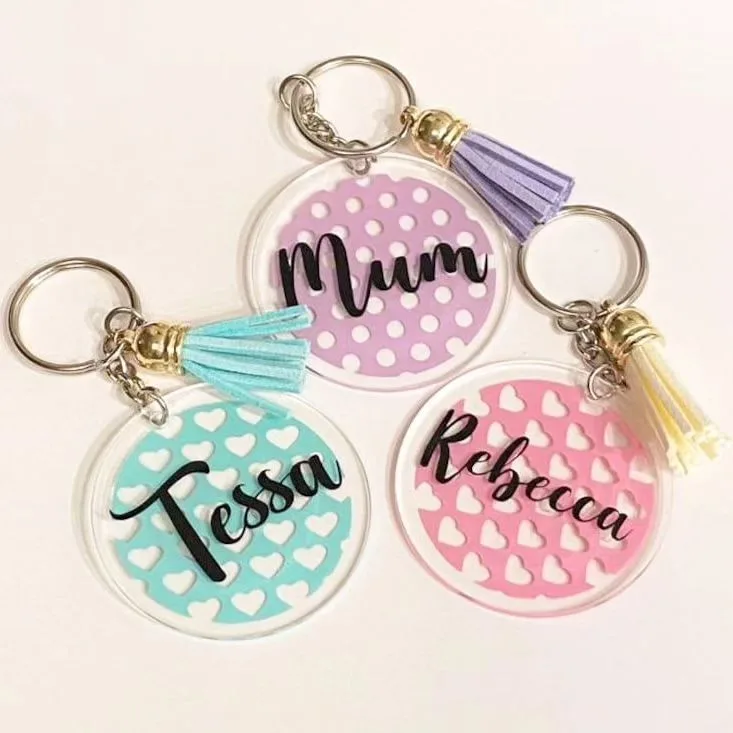
When someone asks what you make, a clear one-sentence answer is worth practising. “I make personalised keepsakes: photo keyrings, that sort of thing” beats a vague gesture at the table.
Let people touch things
Handling an object dramatically increases the chance of buying it. Displays that discourage touching protect your stock and cost you sales.
Answer the personalisation question well
At craft markets, “can you do this with my photo?” is the highest-value question you will hear all day. Have a clear answer ready: what you need from them, how long it takes, how they pay, and how it reaches them.
7. The market does not end when you pack up
Most first-timers judge the day purely on cash taken, which misses half the value.
- Collect contacts. A simple sign-up sheet or a QR code to your newsletter turns a one-day event into an ongoing audience.
- Take photos of your stall. Before the crowds arrive, while it looks its best. This is content for the next six months.
- Write down what sold. Not from memory a week later. Which items, which price points, what people asked for and could not find.
- Note what people asked for. Repeated requests for something you do not make is free product research.

8. The practical kit nobody mentions
Experienced stallholders carry a box of unglamorous things that turn a difficult day into a manageable one.
- Cable ties, scissors, tape and a marker pen
- Weights or sandbags if you have a gazebo, because South African wind is not theoretical
- A folding chair, because eight hours standing is longer than it sounds
- Water and food you can eat one-handed
- Sunscreen and a hat for outdoor markets
- A power bank for your phone and card reader
- Bags for customers, and tissue paper if your items warrant it
- A printed price list as a backup for missing labels
Also bring something to do that is visible and productive. Working on a piece at your stall draws people in far more effectively than standing idle, because it shows them the thing is genuinely handmade.
9. Plan for weather, not for the forecast
Outdoor craft markets in South Africa deal with sun, sudden Highveld thunderstorms and coastal wind, often in one day.
Paper products and photographs are the most vulnerable: humidity curls them and a single gust can put your stock on the ground. Bring covers, keep spare stock in sealed boxes rather than open crates, and never assume a clear morning means a clear afternoon in summer.
10. Treat the first market as research, not a verdict
A disappointing first market is normal and is not evidence that your products are wrong. You had no regulars, no reputation at that market, and you were still learning your own layout.
Makers who do well at craft markets almost always report the same pattern: the third or fourth appearance at the same market outperforms the first considerably, because people recognise the stall and some come back deliberately.
If you can, book two or three dates at one good market rather than single dates at three different ones.
11. Connect the stall to everything else
A market stall works hardest when it is not a closed loop.
Put your website on your signage, your bags and your cards. Offer to take personalised orders on the day for delivery later, which removes any stock limit on what you can sell. And add everyone who is interested to your mailing list, because the customer who bought once in April is far cheaper to sell to in November than a stranger.
Craft markets vs selling online
These are not competing choices; they do different jobs, and makers who treat them as alternatives usually underuse both.
| Craft markets | Selling online | |
|---|---|---|
| Cost to start | Table fee, payable upfront | Low, but ongoing marketing effort |
| Feedback speed | Immediate and unfiltered | Slow, and mostly silence |
| Reach | Limited to who walks past | Unlimited in principle |
| Effort per sale | High on the day, then nothing | Low per sale, high to build |
| Best for | Testing products, meeting customers | Repeat orders, scaling what works |
The productive pattern is to use markets for what they are uniquely good at, watching real people pick things up, put them down and tell you why, and use online for the repeat business that follows.
What markets teach you that analytics cannot
You will learn which item people reach for first, which price makes them hesitate, and which question everybody asks. That information is very difficult to get from a website, where a customer who leaves tells you nothing about why.
Several makers have redesigned an entire product line after one day at a stall, simply from hearing the same request eleven times.
Mistakes that cost first-timers the day
Booking without visiting
Already covered, and worth repeating because it is the most expensive error available at craft markets.
Arriving late
Setup takes longer than you think, and a half-built stall when the first customers arrive costs you the best hour of the day. Arrive earlier than the organiser asks.
Cash only
Loses sales silently. You never find out about the customer who wanted to buy and walked away.
No prices on display
Many shoppers will not ask. They assume it is expensive and move on.
Pricing to beat the neighbour
A race nobody wins. Compete on quality, personalisation and presentation, not on being three rand cheaper.
Bringing one of everything
Reads as clearance rather than a brand. Narrow the range and go deep.
Judging everything on day one
A single market is one data point taken on one day with one weather forecast. Two or three appearances tell you something real.
Craft markets FAQ
How much stock should I take to a craft market?
Enough that the table still looks full at three in the afternoon. A practical guide is roughly three times what you expect to sell, weighted heavily toward your bestselling lines rather than spread evenly.
Do I need a business registration to sell at craft markets?
Generally not to trade as a sole proprietor, though individual markets may ask for their own paperwork and food stalls have separate requirements. Registering a company through the CIPC becomes worthwhile once the business is established, and Seda offers free guidance to small businesses on the process.
How do I find good craft markets near me?
Local community groups and neighbourhood pages tend to be more useful than national listings. Ask other stallholders directly which markets are worth doing: makers are generally open about this, because a good market benefits everyone trading at it.
What is a reasonable table fee?
It varies enormously by market and city. The useful question is not the absolute figure but whether the fee is recoverable: divide it by your profit per item and decide whether that unit count is realistic for the crowd you saw when you visited.
Should I take custom orders at a market?
Yes, and it is one of the strongest reasons to be there. Custom orders remove your stock ceiling entirely. Bring a simple order form capturing name, contact details, what they want, and how they will pay.
What sells best at craft markets?
Across most South African markets, items under R150 that need no size or fit decision move fastest: keyrings, small accessories and personalised keepsakes. Higher-priced pieces sell better once shoppers recognise your stall from previous appearances.
Which months actually matter
Craft markets are not evenly profitable across the year, and knowing the rhythm helps you decide where to spend your table fees.
October to mid-December is the season that carries most makers. Festive shopping brings buyers who arrive intending to spend rather than browse, and personalised items sell particularly well because people are shopping for specific individuals.
February to April is steadier and quieter. Good for testing new products with lower stakes, because a weak day costs you less.
May to August depends heavily on whether the market is indoors. Winter outdoor markets in Gauteng and the Cape can be brutally quiet, and the table fee rarely adjusts to match.
September picks up with Heritage Day and the start of festive planning.
If you only do four craft markets a year, three of them should fall between October and December. That is not a preference, it is where the buyers are.
Book festive dates early
The good markets fill their December dates months ahead, often by June or July. Waiting until October to enquire generally means taking whatever is left, which is usually the weaker markets.
Where to go next
If you are working out what to make and what to charge, start with our guide to pricing handmade products. If you are producing personalised items yourself, the sublimation printing guide covers the production side.
And if you would rather stock ready-made personalised items than produce them, the customisable items range and crafting supplies are a starting point.
Make it personal
Every item in our range can be customised with your own photo, name or message, printed and finished in-house and delivered anywhere in South Africa.